Monday, July 15, 2013

Sex in the Media, the Ethics of Cosplay, and Kant

http://w2.parentstv.org/main/MediaFiles/PDF/Studies/2010_SexualizedTeenGirls.pdf


A report made by Parents Television Council was recently released examining the frequency of sexual exploitation on television, especially humorous depictions of underage exploitation. 
"In the present study the PTC examined the prevalence of sexually exploitative images in the media and found that these images have become common themes in primetime television."
The report highlights the increasing depiction of women as sexual objects, and the increasing prevalence of sexual exploitation and violence.  By presenting exploitation and violence in the context of humor, the report contends that acceptance of such acts is increased.
Specifically, the study examined the prevalence and trivialization of sexual exploitation in the media. Therefore, in addition to examining how often females and particularly young females were associated with sexually exploitative themes, the study examined the number of times sexually exploitative themes were presented in a comedic context intended as humorous entertainment for the viewer.
Basically, the viewer is directed to find sexual exploitation humorous and therefore accept such behaviors as normal.  For example, "dead hooker" jokes were made several times, erasing the civil and personal abuses which prostitution often produces.

Most worryingly, the report highlights the connection between humor and underage exploitation.  That is, when a female was depicted being exploited, more often than not that female was underage.  Since young women model acceptable behavior from older women and more and more from media sources these television shows create an atmosphere of acceptable behavior which young women can emulate.
These images are believed to be a powerful force in shaping the sexual decisions and behaviors of developing youth. Associating laughter with topics like rape, child molestation, prostitution, sex trafficking, and sexual harassment further compounds the effects of sexualized media images. As long as there are media producers who continue to find the degradation of women to be humorous, and media outlets that will air the content, the impact and seriousness of sexual exploitation will continue to be understated and not meaningfully addressed in our society.
Adult women were also often depicted in sexually exploited roles, increasing the likelihood that girls and young women would model their behavior on these depictions. 

The report concludes that "if past research is correct that television can shape our attitudes towards social issues, and if media images communicate that sexual exploitation is neither serious nor harmful, the environment is being set for sexual exploitation to be viewed as trivial and acceptable."  This conclusion raises questions of its own which the report raises but does not answer.  Namely, is it every acceptable to laugh at sexual exploitation of anyone, but especially of a child?  The connection between the fantasy of a television show and the reality of behavior norms remains obscure, and the report adds that further research is necessary.  Certainly, however, this is a worrying trend and raises even more trenchant ethical problems surrounding certain geek sub-cultures.

I've been harping on cosplay for a while because this is what the interwebs are intent on talking about.  An ongoing debate between male convention-goers, female convention-goers (especially models and cosplayers) and John Scalzi has created the convention and internet meme: Cosplay does not equal consent.

At the heart of the controversy are numerous allegations and instances of harassment of women in the industry made by male convention-goers .  Sometimes the incidents are obvious: ass-grabbing, fondling, and coddling of female models by men.  Sometimes they're more obscure and often involve jokes and inappropriate comments.  As often as not the incidents reflect an ongoing perception by many men that their culture is being appropriated by women.

This offers an interesting tangent I'll not address here, except briefly.  To whom does a particular culture actually belong?  Is it even something that can be "owned?"  Certainly it can be appropriated, as Jazz and Rock n Roll have been demonstrating since the early twentieth century.  Cultural boundaries shift to include previously marginalized or excluded populations, or are actively appropriated to minimize or diminish cultural homogeneity.  The colonization of cultural norms often reflects the power dynamic between colonizers and colonized, with an appropriated culture actively used to disrupt patterns of community and social life around which populations cohere.  That's just a really complicated way to say that people often appropriate culture to lessen the power of that culture.  So when male gamers, geeks, and nerds complain about women in their ranks, it's as often because they believe their community is threatened by that intrusion.

Moving on.  Regardless of why men and women choose to dress up in costume, they should expect a minimum of personal security.  That is, everyone has a right to not have violence acted against them.  Their personal boundaries are inviolate as a matter of principle.  But when they present themselves as visual representations they can expect some manner of objectification which blurs the line between human being and objet d'art.  An inanimate object has no inherent moral or ethical obligation owed to it.  This is really obvious ethical territory, so I won't delve too deeply.  But it presents a jumping off point from the previous study to an ethic of victim-blaming.

Namely, if a person consciously chooses to depict himself or herself as an object of admiration, does that person relinquish his or her right against certain -- but only certain -- protections?  

If we operated in a vacuum, ethical action would be easy.  In a world of one there are no moral or ethical obligations.  But add even a single person and that calculus changes.  Moreover -- and I accept this axiomatically -- human beings possess only a single right granted by nature: the right to use violence to achieve your own needs and wants.  This is the only right naturally granted to individuals.  But in society, we willingly relinquish that right to ensure that violence is not used against us.  This is the single obligation of the state to its citizens.

The other rights such as freedom of speech, religion and so on, are historical accretions or tangents of that primary obligation.  Recognizing their artificiality (and in some instance arbitrariness) allows us as reasoning people to craft a system of morals and ethics which best reflects our needs and wants.  As such we have constructed a moral system which exemplifies the individual and makes the individual inviolable except in certain rare exceptions.

But a person may willingly relinquish certain rights in the pursuit of other ends.  A citizen relinquishes some rights when entering the military, we relinquish the right to enjoy the total fruit of our labor when we offer the government a percentage of our labor in the form of taxes -- wealth necessary to accomplish other goals we have collectively decided are worthy of pursuit. 

The reciprocal nature of moral obligation helps explain how someone can relinquish certain duties owed to himself simply by being a human being in modern society.  First, people are owed a certain level of truthfulness; that is, they cannot be coerced into normal actions by means of withholding information which they deserve to have.  In normal circumstances they also cannot be coerced into certain actions by the threat or use of violence.  These are expectations of behavior, as rights necessarily are, but expectations to which a person can appeal for redress when they are violated.

But this ethical system also requires that people's behavior remain appropriate to the social context.  Each person is sovereign in her actions, and sovereign in her responsibility.  That is, she must take responsibility for all breaches in which her negligence was the primary motivator.  For instance, a starving man's theft of bread is mitigated by his starvation.  In normal circumstances, theft is punishable as a breach of social and ethical obligations (you owe it to your neighbor that you won't take his stuff), but starvation is beyond (we hope) normal circumstances.

Similarly, in normal circumstances, a person's autonomy is inviolable.  However, as punishment for a crime that person may be imprisoned and his autonomy circumscribed.  In some instances, the crime may be sufficiently heinous or particularly egregious to merit permanent expulsion from the protections and privileges of society.  In these instances, capital punishment in the form of execution is merited until such a time as expulsion may be made in another form.

Which is a very dry detour from where I started and that was wondering what obligations models and cosplayers willingly give up when they don (or doff) certain clothing.  Cosplay may not equal consent, but does it equal a level of objectification which must be constantly combated by reminders of a person's humanity?  Possibly.  If that's the case, then are these not mitigating circumstances which perhaps lessen the offenders culpability?

I'm going to say no, and here's why.  Just as the thief still bears an obligation to remit what he has stolen to the owner (return in kind or as payment), people always have an obligation to others that cannot be reduced.  The mitigating circumstances might help diminish the punishment, but never the obligation itself.  As such, social ostracism might be an appropriate punishment for offenders at conventions, but I cannot see an ethical reason to withhold convention fees already paid, or the imposition of some sort of fine.  A declaration that such behavior is unacceptable is ethically permissible, but punitive actions are impermissible.  And certainly an apology is in order.

However, a model relinquishes the right to be offended by photography, harmless objectification (is objectification ever harmless . . . ?) by the very fact that they have willingly assumed a level of deviation from social expectations already.  Just as a person in public has no reasonable expectation of privacy, a cosplayer has less by the fact that they have willingly called attention to themselves.  Moreover, though turnabout does often seem fair-play, certain creep-galleries (in which the cameras are turned on photographers, often men, who seem particularly invasive in taking pictures) are themselves impermissible insofar as photographers have not assumed the same level of provocateur.

To be clear, this ethical system only includes actions that are not in and of themselves already illegal or clearly delineated in some kind of statement of acceptable behavior to which the offenders have had access and/or have read and understood.  This is an ethics of the gray areas in which we find ourselves daily and hews mostly closely to Kant's categorical imperative: People must never be treated merely as means to an end. (An interesting aside: This is the moral foundation against prostitution and sex work.  Where it gets really convoluted is where it descends into deontological morality, which I might turn to in another post.)

This all becomes much more complicated if one considers the pervasive atmosphere of sexual exploitation present in the media -- especially social media, which is its own kind of echo-chamber.  It calls into question the notion that certain behaviors are made entirely without coercion.  If a girl grows up perceiving certain actions as acceptable, and allowing herself to be exploited because she is unaware that she is being exploited, are her actions freely made?  Indeed, cannot one make the argument that producers of such content are themselves under an ethical obligation to cease their own behavior?

I'm going to leave these questions largely unanswered, since the report leaves them unanswered as well.  But I will leave you with their parting challenge:

The frequency with which viewers are able to watch and laugh at these sexual exploits further supports the notion that media is potentially creating an environment that trivializes the sexualization and sexual exploitation of women. The significance of “frequency” is especially relevant in this study given the continual absence of countervailing messages among the programs examined. When we laugh about dead hookers it becomes increasingly difficult to see the mistreatment of sex workers as a national civil and human rights issue. The same can be said for child molestation, sex trafficking, etc. When these messages, images and ideologies are delivered via mass media, the definition of acceptable and unacceptable behaviors are communicated both implicitly and explicitly to viewers. Similarly, when the media associates humor with sexual exploitation they are sending a strong message that these issues are harmless and require neither urgency nor a strong response.
Although results from this report are disturbing, it is the desire of the PTC [Parents Television Council] that these findings will spur concern, increased dialogue, and a collective responsibility to find answers that will result in a qualitative difference in the lives of young girls and women everywhere.

Friday, July 12, 2013

The Rest of the Last of Us

I'm about halfway through playing "The Last of Us," Naughty Dog's newest game.  Renowned for their Uncharted series, Naughty Dog is once again tackling an over-the-shoulder shooter featuring a male lead and his female sidekick sloughing through bad-guys.  In this case, Joel is the protagonist, and the head you inhabit throughout the game, and Ellie is his side-kick, a precocious fourteen year-old who holds the secret for combating the zombie apocalypse.

Just from that synopsis, the game doesn't sound all that original.  The plot certainly is nothing to write home about.  But the acting is incredible and the designers seemed genuinely interested in building real characters.  Joel, especially, is tired and broken.  But each of the side-characters with whom you often interact are fully-developed, often conflicted, people.  Expected emotional cues occur early in the game, and then diverge quickly into rarely trod territory.  So despite its mediocre plot (so far . . . there could be a twist I haven't anticipated) the characters feel real, and I have developed a genuine attachment to Joel and Ellie.

What is ruining the game for me, though, are the baddies.  First, from the trailers and the synopsis on the back of the game, we know already that the world is in the last gasp of ruin.  Anarchy prevails, zombies run wild, and decency is all but unknown.  So we should expect Mad Max-style confrontations, as well as 28 Days Later run-ins with deranged and hostile enemies.  And we get both.

But other than their skins, each enemy seems to behave the same way.  Some zombies hunt by echo-location only, and wander around maps with ears cocked.  Others group together in packs and rush you from corners.  There's the occasional solo--a big daddy who's nearly impossible to gun down (which, because of the limited ammunition practically requires that you just run in circles whacking it with bits of debris you find lying around). 

Your "human" opponents aren't much different.  Especially the "Lord of the Flies" baddies who wander tumbled urban landscapes.  Some you can just sneak past, despite the fact that it's broad daylight and they're staring right at you.  Others gang up and rush you from all directions.  The only exception are the cops and soldiers who sometimes lob a few bullets your direction, which only makes me suspect I'll soon encounter a zombie who lobs some sort of spit-bullet my direction. And there's the occasional solo baddie who's nearly impossible to gun down (see above).

But oh well.  Because really, the bad guys aren't there to be killed.  Unlike Uncharted and Uncharted Two, which were notorious for the massacre you inflict on untold hundreds of red, blue and yellow mercenaries (literally, they all wore different color clothes so you knew how to shift your tactics for them), The Last of Us depends on sneaking and not-killing as much as bludgeoning your way through a map.  In fact, it built itself on that premise.  You're given hardly any ammunition (though there does still seem to be a lot lying around in odd locations) and expected to think your way through and around confrontation.  More often than not, if you decide to go in guns blazing, you're bound to get shot dead in the first charge.

Beyond the obvious disadvantage this lends to your character, and the lazy enemy AI, the atmosphere is fantastic, lush, and, well . . . atmospheric.  At first, I was a little unsettled by how bright the world seemed.  But then I realized that despite the downfall of human civilization, the sun would still shine.  This lack of lens seems an apt metaphor for the game itself.  We see the end of the world unaided, with all the humanity, anarchy, and danger unmitigated by directorial or narrative sleight-of-hand.

So consider this an update rather than a review, because I suspect the ending is going to leave me raw and slack-jawed.  I'll let you know when I get there.

Thursday, July 11, 2013

Anticipation!

I saw this preview for something or other I saw recently.  Oh yeah, "After Earth."  Remind me to write a review about that movie.  Or not, it doesn't really matter.  But I really want to see Alfonso Cuarón's "Gravity," starring Sandra Bullock -- you know, when she isn't being hilarious in "The Heat."  Take a look and get excited with me!


Wednesday, July 10, 2013

Cosplay and Fan Fiction

Robin Hobb (who is also Megan Lindholm) once remarked at a book signing that she thinks of fan-fiction as a misuse of limited time.  We're all given a limited period within which to make our art and she thought that fan-fiction (and to a lesser extent commissioned work like film novelizations and filling in for deceased authors as Brandon Sanderson is for Robert Jordan) was time poorly spent.  Instead, she advocated that authors invest in themselves: that instead of playing in someone else's sandbox, they should be making characters and worlds of their own.  I think it's good advice, but it's not advice that I gravitate to.

You see, I started in Wheel of Time fan-fiction.  I'm sure much of it is still floating around the interwebs and my success (or lack thereof) might be an effective scale by which to judge Robin Hobb's advice.  But I have a hard time accepting that the hundred of hours and millions of words (yeah, I counted once) were wasted.  I have to believe that I gained valuable insights into the mechanics of story, plot, narrative, and characterization.  And though those words will never be published, that's okay.  I erred often and frequently, but I learned from those mistakes and I carry them with me still; they influence how I write this blog, how I write papers, how I write articles, short stories, and novels.

Similarly, as I was thinking about fan fiction, I got to thinking about cosplay.  For those of you not in the loop (an orbit I barely inhabit) cosplay stands for costume play and is devoted to fans of particular works of fiction wearing the attire, or acting in the manner of, their favorite characters.  There's quite a bit of ruckus being made as to whether it's part of nerd culture, or geek culture, somewhere in the middle, or something else entirely.  It has the feeling of a Renaissance Fair without the obvious anachronisms.  Or, at the very least, entirely intentional anachronisms.  And it's also related to steam punk, which is a whole other kind of nerdery on which I'm not qualified to comment.

But it strikes me that the investment of time, energy, and creativity so prevalent in cosplay is a kind of misappropriation of talent, skill, and dedication.  For the same reason as Robin Hobb advised against fan fiction, I have to wonder if these people couldn't excel at their own endeavors.  Much like the teacher who wonders if little Johnny couldn't be a prodigy if he just applied himself, I wonder if cosplayers are just not applying themselves.

But I have to take a step back.  After all, I was a writer of fan fiction.  I loved it.  It gave me a sense of community and included me in a creative world that was also a creative outlet and source of inspiration.  Possibly, cosplay does the same.  Nerd, geek, whatever.  It's the community that formed around common interests that really matters. 

But still.  I have to wonder. 

Monday, July 8, 2013

Man of Steel Review

Lest this blog become too devoted to movie and book reviews, I'll endeavor in the coming weeks to get more up-to-date content up.  That means TV reviews, in case you're wondering.  And I might even pause to pen a few anecdotes and observations.  Now that I'm a college graduate, I feel I've earned the right to opine profusely for a few short weeks.  Then I'll have to dive back into the real world of nine-to-five.

But until then, let's talk about Man of Steel.  Starring Henry Cavill as the rarely-named Supes (I'm told there was a bit of a snafu involving the rights to the Superman name, but haven't confirmed that for myself) and Amy Adams as the precocious Louis Lane, this movie managed to do something interesting with a character that has more often than not languished in obscure, ether-sucking abstraction.  I mean, let's not point fingers, but Lex Luthor's land-making, land-grab scheme in Superman Returns was just . . . banal.

Man of Steel mixes it up a bit, and in doing so manages to create the right balance between moral dilemma and abstract what-if.  Because, let's be honest about something.  Superman is a god among men -- a literal Ubermensch.  What does a god do when settled among mortals?  This paradox lies at the heart of the movie, and while it doesn't succeed gracefully, it does manage some success.  Where it makes missteps, I'm more than willing to accept and forgive them because of the larger story being told.  Nowhere do the missteps seem so overwhelming that I simply cannot overlook them (take a look down at Star Trek Into Darkness to see some mistakes that I will not forgive -- I mean, come on J.J. . . . gravity doesn't work that way at all.)
This is how gravity works.

The movie itself strikes a very fine line between origin story and dramaction.  Russell Crowe, despite his many appearances in the movie, is largely not present, but we're reminded often that the ghost of Jor El haunts Clark Kent, who is torn between his two identities: Human and Kryptonian.  The sacrifice of both fathers are played to maximum effect.  On Krypton, Jor El sacrifices himself to ensure the life of his son on a world where he would be as a god among us.  And Jonathan Kent, whose sacrifice ensures that Clark can continue to live an unremarkable life blending in with human beings.

Forgetting for a moment that Superman is an alien being --and the movie does not let us forget for an instant -- the tension between Lois and Clark is tantalizing, without ever being over the top; foregone, thankfully, is the glasses ruse used to such laughing effect in both the comics and earlier films.  Hardly a spoiler, but Lois knows that Clark Kent is Superman nearly halfway through the film, and conspires with Superman to conceal his identity from humanity at large, and from her editor, and various military types in general.
Juxtaposition, anyone?


This allows a much more organic progression to their relationship, without the entirely saccharine tension of will-she-find-out so prevalent in earlier incarnations -- and indeed still with us in Superman Returns.

That leads me to a moment of speculation.  And behold!  There be SPOILERS ahead.

At the end of the movie, Zod having been defeated by both human gumption and Man of Steel brawn, decides to remove his exoskeleton warsuit and go mano a mano with Supes.  The problem with this has been highlighted in Superman's own upbringing, and by an earlier scene when Superman destroys the Zod's helmet.  Something in the atmosphere affects Kryptonian physiology so that the full potential of their super powers are manifested.  Yeah, they're strong under just the yellow sun, but our atmosphere knocks it up a notch and gives the Kryptonians super senses as well as, conceivably, the ability to defy gravity.

Superman, as he points out to Zod, has had years to overcome the naturally vertiginous effects.  He can focus his senses and block out the remaining cacophony.  Zod, without that training, is overwhelmed the first time his helmet is removed.  But later, in the final showdown, he declares that as a genetically bred warrior, he has honed his body his entire life, and can master his powers in an afternoon.  Eschewing his warsuit, he demonstrates his mastery by beginning to fly, a skill which Superman has only just acquired (once he put on the suit).
Pretty sure he took the red pill.

This is where I have a beef.  I believe that Zod purposefully took off the suit knowing that Superman's thirty years of soaking up the sun would make Superman more powerful.  That though well-matched, Superman was nevertheless superior, and that in taking off the suit Zod committed himself to forcing Superman to kill him.  He'd already declared that with the Genesis Chamber on the scout ship destroyed, he had nothing.  He'd committed himself to destroying Jor El's son already, but knowing that he was likely to fail, Zod realized that his final bid was to force Kal El to take his life.

He accomplished this in the subway, where it came down to Superman's option to save the earthlings, or kill Zod, and Superman chose us.  His mantle wasn't placed on him, he'd willingly taken it up.  And the movie succeeds with this final showdown where so many others fail because this version of Superman is not some nihilistic god bound by obligation to defend humanity, but rather one that has willingly committed himself to our good.

And that's why I choose to overlook its several flaws -- because ultimately the story revolves around the choices that the characters make and ultimately their very real ramifications.   

Friday, May 24, 2013

Dark Night of the Soul . . . Or, Star Trek Into Darkness Review


A comment on the franchise?
Let's get something out of the way first.  I like Star Trek.  I was a fan of the reboot and the original series.  I'm a huge fan of Deep Space Nine and I think it represents a solid attempt to combine action with a meaningful debate on the morality of war, religion and about a million other things.  It was also fun as all get-out.

Which is what Star Trek Into Darkness definitely is.  Fun.  A wonton romp to just about nowhere, without rhyme or reason.  And several 'splosions.  And Alice Eve in her underwear.  Because, I mean, really.  For what other reason does her character appear except to randomly (and it really is out of the blue) undress in front of Captain Kirk?

Which is basically what this movie boiled down to.  A lot happened -- from a terrorist attack, to an interstellar manhunt, to a ten-second debate on the existential dilemma between law-and-order and justice -- but not a lot really happened.  Cribbing many of its lines from Star Trek: The Wrath of Khan, it felt like a bad joke, or a poorly timed parody of a film that was deeply invested in exploring the boundary between life and death, heroism and the extent of scientific advancement.  Moreover, "Wrath of Khan" has a deeply emotional conclusion which is the ultimate culmination of decades of on-screen relationships between the central characters.
Because why not?

Ultimately, the second Trek is a silly pastiche of Star Trek tropes that descends quickly into inanity.  While it moves quickly, the pacing seems directed at brushing over its shallowness; the humor is sophomoric and the petty bickering between Kirk and Spock is just that: petty.  While it might be a spectacle to behold, it left me with a bad taste in my mouth.  It was pandering of the worst kind.

I don't recommend this movie to really anyone.   

Wednesday, May 22, 2013

What the What? . . . Or, Bioshock:Infinite Review

I feel as though the statutes of limitation has worn off, and I can discuss Bioshock: Infinite with a minimum of spoilers. 

Let's get this out of the way first.  Great game.  Deeply immersive, with a great plot, superb voice-acting, and a better-than-pretty-good companion.  That being said, when I pay $60-70 for a video game, I demand certain things.  One of those things is replayability; really, it's top of the list.  Great story, great gameplay, but what I really want is the ability to immerse myself in the game several times, constantly discovering more.  I want Skyrim. 

Bioshock:Infinite is no Skyrim.  Nor does it ever strive to be.  It's a first-person shooter through and through, with a beautiful environment and a pretty trippy story.  You play Book DeWitt, and ex-Pinkerton agent hired to infiltrate the steam-punkish floating city of Columbia and rescue a young woman named Elizabeth from the clutches of the evil Zachary Hale Comstock.  Yeah, if you're a student of American history, that last name should sound familiar.

Anthony Comstock
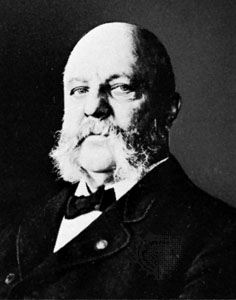
The Comstock Laws are named for Anthony Comstock, who was Post Office Inspector and helped craft and pass a series of laws in 1873 banning obscene materials from being mailed by the Federal Government.  If you think Zachary Hale Comstock would live up to that draconian moralizing, perhaps borrowing from history, you'd be wrong.  In fact, the fictional Comstock is a purposeful amalgam of several historical actors.  The name seems to have been chosen because of its vague association with the late nineteen-century and not for any particular thing that Anthony Comstock did.

Zachary Hale Comstock is a viciously racist jingoist.  Seeing the moral decline of the United States following the Civil War, he takes his magic floating city and secedes from the Union.  It's a strangely dystopian view of American history, and highlights the lingering darkness of American history.  By re-telling the American history through a lens of counter-factual narrative, the game glances at roads not traveled without examining the deep sociological and historical trends which drove the history of the United States. 
The "Battle" of Wounded Knee

Nevertheless, it is fun and one should forgive their central conceit.  I mean, really.  It's a floating city.  You knew it was fantasy going in.  But it does leave one wondering if video games should teach history.  On the one hand, at least people have the sense that history is valuable and can inform future decision.  But on the other, it's really sloppy, and tends to flatten the rich experience of both the historical profession, and the historical experience in which people actually lived.

But let's move on the gameplay itself.  I'm not a hardcore gamer, so much of it boiled down to how easy it was to move, shoot, and not get stuck on the myriad boxes lying around the map.  Uncharted 2 had this problem, as did Black Ops 2.  I refer to them as "sticky" games.  The character, instead of sliding around obstacles, often got stuck on a piece of paper strewn about and was shot dead.  Bioshock: Infinite, fortunately, did not have this problem.  Movement was easy enough, and the much-touted aerial combat was fine, but nothing to write home about. 

The main comment I have concerns their magic system.  Yeah, you can shoot crows and fire from your hand, but calling it a "vigor" instead of a "plasmid" doesn't change the fact that you're shooting fire and crows from your hand.  It's just magic by another name.  As such, it's not really that useful, or even that much fun.  Most of the time I ran around shooting people.  The vigors added very little tactical advantage.  But they were fun to look at. 
My hands are on fire! 

That seems to be the takeaway of the whole game.  The world is beautiful. 

The actual plot?  Just so-so.  Save the girl, beat the bad guy, flee the scene.  The many twists they introduced were fun, but never spectacular, though told in an original and innovative way.  Kudos for that.  But the conclusion left me scratching my head, trying to rectify what I'd learned playing the game versus what I learned at the final reveal. 

It sort of made sense, but only for the final third of the game.  Everything before that seemed to contradict, or at the very least not conform, to the final reveal.  Which is okay, I suppose, but it doesn't lend itself to wanting to replay the game to figure out how the storytellers were able to capture that effect.  It felt . . . lazy. 

So while it was fun at the time, it wasn't a great amount of fun.  The technical wizardy was evident, and appreciated, but couldn't quite make up for the fact that the plot was thin, confusing, and ultimately self-contradictory.  Would I recommend this game?  I'm not sure.  Maybe if you get it on sale, or rent it from a RedBox.  Otherwise, save your money and read a good book instead.